
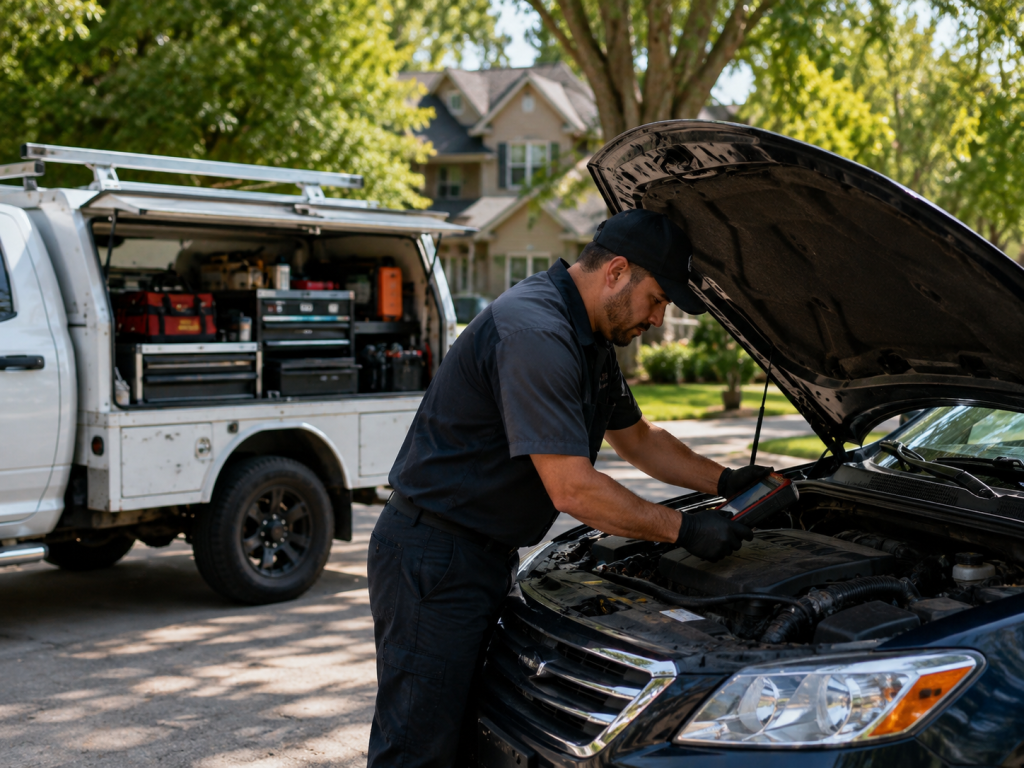
Most drivers assume winter is the season that kills car batteries, and in much of the country, that assumption holds true. Phoenix flips this expectation entirely. Here, summer is the real threat, and the numbers back this up clearly, since a battery in the Valley of the Sun typically lasts noticeably fewer years than the same battery would in a more temperate climate, almost entirely because of what our extreme summer heat does to it month after month.
Why Heat Is Actually Harder On Batteries Than Cold
It seems counterintuitive at first, since a cold morning is when a struggling battery most obviously reveals itself through a slow crank or a failure to start. But cold weather mostly just exposes a battery that has already been weakened, it does not necessarily cause that weakening in the first place. Heat is the actual culprit behind most of that underlying damage, since elevated temperatures accelerate the internal chemical reactions inside a battery, causing internal components to corrode faster and battery fluid to evaporate at a higher rate than it would in a milder climate.
This process, sometimes referred to as heat aging, happens continuously throughout a Phoenix summer, whether or not the battery is ever actually tested by a cold start. A battery sitting in Phoenix heat for months is degrading internally the entire time, regardless of how normally the car seems to be starting on any given morning, which is exactly why so many batteries here fail with what feels like very little warning.
Why Phoenix Specifically Pushes This Process To The Extreme
Phoenix does not just get hot, it stays hot for an unusually long stretch of the year, with many days reaching well past a hundred and ten degrees and overnight lows in the summer often remaining above eighty even after the sun goes down. This lack of any real overnight relief matters considerably, since a battery in a milder desert climate might get some reprieve during cooler nights, allowing internal temperatures to drop somewhat before the next day’s heat begins building again. Phoenix batteries rarely get this break, facing sustained elevated temperatures around the clock for weeks at a time.
Engine bay temperatures compound this further, since a parked vehicle sitting in direct Phoenix sun can see under hood temperatures climb dramatically higher than the already extreme ambient air temperature. A battery mounted in this environment experiences heat stress considerably more intense than a simple outdoor temperature reading would suggest, which is part of why battery life in Phoenix often falls well short of the multi year lifespan a manufacturer might advertise based on more typical, moderate testing conditions.
Early Signs Your Battery Is On Its Way Out
A car that cranks slightly slower than it used to, even if it still starts without much delay, is often the earliest sign that a battery’s internal capacity has already begun declining. This symptom is easy to dismiss since the car is still starting normally, but a battery experiencing heat aging typically does not fail suddenly out of nowhere, it declines gradually first, and catching this early decline gives you a real window to replace the battery before it fails completely.
Dimming headlights or interior lights during startup, a battery warning light appearing on the dashboard, or accessories that seem to lose power more quickly than they used to when the engine is off are all worth paying attention to. A swollen or bulging battery case is a more advanced and visible sign of heat related damage, since extreme internal heat can cause physical deformation of the battery housing itself. If you have already experienced a starting failure, our guide on the top 10 reasons your car won’t start and how to get back on the road covers a range of causes worth ruling out, several of which become considerably more common once Phoenix summer heat has already taken a toll.
Why Waiting For A Complete Failure Is A Costly Approach
Many drivers only think about their battery once it fails outright, typically stranding them in a parking lot or driveway at an inconvenient moment. By that point, the internal degradation has usually been building for weeks or months, meaning the failure was rarely as sudden as it felt. Testing battery health proactively, particularly for a battery that is a few years old and has already been through one or more Phoenix summers, allows you to replace it on your own schedule rather than during an emergency.
The cost comparison matters here too. A proactive battery replacement, scheduled at your convenience, is a straightforward and predictable expense. An emergency replacement following a complete failure often comes with the added cost and hassle of a tow, lost time waiting for help in the heat, and sometimes a rushed decision about which replacement battery to choose simply because you need the car running again as quickly as possible.
Why Testing Matters More Than Guessing Based On Age
While battery age is a reasonable starting point for concern, actual capacity varies considerably between individual batteries even of the same age, since factors like how much direct sun exposure a vehicle receives or how consistently it is driven can affect the rate of heat related degradation. A proper test measures actual cranking performance and remaining capacity, giving a far more accurate picture than assuming a three year old battery is automatically fine or automatically failing based on age alone.
Why A Mobile Mechanic Fits Phoenix Summers Well
Dealing with a dead battery in Phoenix heat is genuinely unpleasant, particularly if it happens in a parking lot with no shade during the hottest part of the afternoon. A mobile mechanic can come to your home or workplace, test your battery’s actual condition, and replace it on the spot if needed, without requiring you to deal with the heat while waiting for a tow or a shop appointment.
We covered the broader advantages of this approach in our article on why mobile mechanics are better than traditional auto shops in Phoenix, which explains how convenience and proactive service come together, particularly valuable heading into another triple digit Phoenix summer.
Get Ahead Of Phoenix’s Toughest Season For Batteries
Phoenix summer heat is quietly one of the harshest tests a car battery faces anywhere in the country, and drivers who test their battery proactively rather than waiting for a failure are far less likely to end up stranded during the hottest stretch of the year. Given how predictable this seasonal pattern is, treating a pre summer battery check as an annual habit, much like scheduling an oil change, is one of the simplest ways to stay ahead of a failure that Phoenix’s climate makes almost inevitable eventually.
If it has been a while since your battery was tested, visit our homepage to learn more about our services, or reach out through our contact us page to schedule a visit at your home or office anywhere in the Phoenix area.
A little proactive attention now can help your battery hold up against everything another Phoenix summer is about to bring, rather than leaving that outcome to chance during the hottest weeks of the year.