
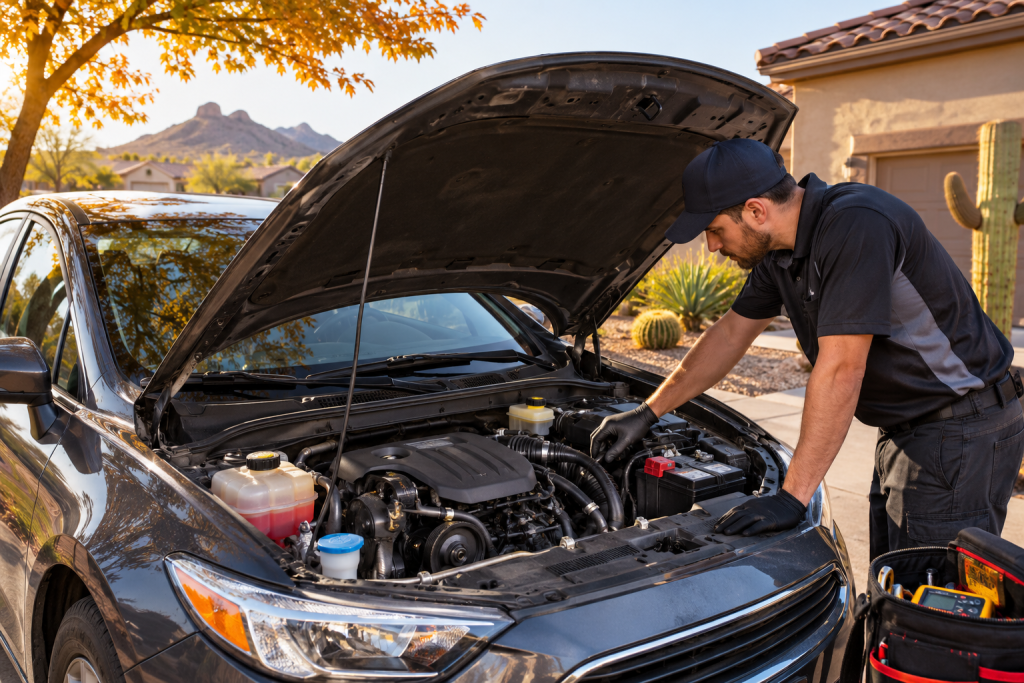
When the temperatures finally drop and the first truly comfortable mornings arrive, most Phoenix drivers breathe a sigh of relief. Your car does not feel the same way. A Phoenix summer is one of the hardest tests any vehicle can face, with months of intense heat, hot pavement, long idling in traffic and sun that never lets up. Parts that looked fine in the spring can come out of summer worn, weakened or on the edge of failure. Fall is the best time to find out, because the weather is mild enough to be comfortable while you work, and problems found now can be dealt with before the next stretch of hard use, and before the cold nights and winter rain show up. This guide walks through the parts and systems that take a beating in the desert heat and should be checked once the summer is over. If you are searching for fall car maintenance in Phoenix, here is a practical checklist.
Why Fall Is the Right Time for a Checkup
- Heat damage is cumulative. Rubber, plastics, fluids and batteries wear a little more each hot day, and the result often shows up weeks or months later.
- Problems are easier to deal with now. You can choose when to get a repair done, instead of dealing with it in a breakdown.
- Weaknesses show up with temperature swings. Cooler nights can expose a battery that was holding on through the heat.
- It sets you up for the year ahead. A careful check now gives you a clear picture of what the car needs.
Our article on the signs that heat is damaging your car describes the warning signs of heat damage in detail, and this guide is a companion that walks through what to inspect after the season.
The Battery
Heat is harder on a battery than cold. High temperatures speed up the chemical reactions inside, which causes fluid to evaporate and internal parts to wear faster. A battery that made it through the summer may be weaker than it seems, and cooler weather can reveal the damage. Our guide on why Phoenix summers are the toughest test for your car’s battery explains why, and a fall test is a smart move.
- Have it tested. A proper load test shows how well the battery performs, which a voltage reading alone cannot.
- Check the terminals for corrosion, looseness and damaged cables.
- Look at the case. A swollen or cracked battery is a sign to replace it.
- Know the age. There is a date label on most batteries, and a technician can read it.
- Watch for slow cranking, dim lights or a battery warning light.
Tires
Hot pavement and high temperatures stress tires. Heat raises the pressure inside the tire, accelerates aging and can contribute to cracking and tread separation.
- Check the pressure using the sticker in the driver’s door jamb or your owner’s manual, with the tires cold.
- Look for cracks in the sidewalls and between the tread blocks.
- Check for bulges, cuts and uneven wear.
- Measure the tread, and look for the wear bars.
- Check the age. A date code on the sidewall shows when the tire was made, and sun and heat can make tires age faster.
- Rotate the tires as the manual advises.
Cooling System
The cooling system works its hardest in the summer, and it should be checked afterward for hidden damage.
- Check the coolant level in the reservoir with the engine cool. Never open a hot radiator or coolant cap.
- Look at the coolant. Rusty, oily or sludgy coolant needs attention.
- Inspect the hoses. Look for cracks, bulges, soft spots and crusty residue near the connections.
- Look for leaks around the radiator, water pump and hose connections.
- Check the radiator fins and front of the car for dust and debris.
- Follow your owner’s manual for the coolant service interval.
Belts and Hoses
Rubber parts dry out and crack in the heat. Look at the drive belt for cracks, fraying, glazing and wear, and listen for squealing. Check the other hoses under the hood too, including those for the heater and air intake, and any vacuum lines you can see. A belt or hose that fails can leave you stranded, so replace the ones that show wear.
Air Conditioning
After months of constant use, the air conditioning system may be tired. Test it while the weather is still warm enough to tell.
- Check the air temperature and airflow.
- Listen for odd noises from the compressor or blower.
- Notice musty smells, which may mean moisture or mold in the system.
- Replace the cabin air filter, which collects dust and pollen, if it is due.
- If cooling has faded, have it inspected, since there may be a leak or another issue.
Engine Oil and Other Fluids
Heat is hard on every fluid.
- Engine oil. Check the level and condition, and follow the service schedule in your owner’s manual, including any schedule for severe driving conditions, which often covers extreme heat and stop and go traffic.
- Transmission fluid. Heat is a major factor in transmission wear. Check it if your car has a dipstick, or have a technician check it.
- Brake fluid. It absorbs moisture over time, and heat ages it. Have it inspected.
- Power steering fluid, if your car has it.
- Washer fluid. Top it up for the winter rain.
Brakes
Heat and constant stopping in traffic wear brakes. Listen for squealing or grinding, feel for pulsing in the pedal and notice any pulling. Have the pads, rotors and brake lines inspected. If the pedal feels soft or the car does not stop right, do not keep driving normally. Brakes are a safety system, and repairs are best handled by a qualified technician.
Wiper Blades and Windshield
Sun cooks wiper blades, leaving them hard, cracked and streaky, just in time for the first fall or winter rain. Check the blades and replace them if they chatter or smear. Look at the windshield for chips and cracks, since temperature swings can make a small chip spread.
Lights and Electrical Parts
- Test all the exterior lights. Headlight lenses can cloud and yellow in the sun, which reduces visibility at night.
- Check the interior lights and dashboard.
- Look at wiring and connectors for brittle insulation, if visible.
Suspension, Mounts and Bushings
Rubber bushings and mounts harden in the heat. Listen for clunks and squeaks over bumps, and notice any change in ride or handling. A technician can check the suspension and steering parts for play and wear.
Exterior and Interior
- Paint and clear coat. Look for fading, peeling and chalky patches. Washing and waxing helps protect the finish.
- Plastic trim and rubber seals. Check for cracks, warping and shrinkage. Door and window seals can dry out and let in dust and water.
- Dashboard and upholstery. Sun can crack dashboards and fade fabric and leather. A sunshade and conditioning products help.
- Glass and mirrors. Look for chips and loose parts.
A Simple Fall Checklist
- Test the battery and clean the terminals.
- Check tire pressure, tread and condition.
- Inspect the coolant, hoses and belts.
- Test the air conditioning.
- Check the oil and other fluids.
- Inspect the brakes.
- Replace worn wipers.
- Test the lights.
- Look over suspension and rubber parts.
- Wash and protect the exterior and interior.
Warning Signs That Should Not Wait
- A rising temperature gauge or any steam from under the hood.
- A soft brake pedal, grinding brakes or a brake warning light.
- A tire with a bulge or visible damage.
- A burning smell or smoke.
- Steering that feels loose or vibrates strongly.
- A flashing check engine light.
If any of these appear, pull over safely and get help. Your owner’s manual explains the warning lights on your dashboard.
How a Mobile Mechanic Can Help
You do not have to give up a day to get your car ready for the rest of the year. A mobile mechanic can come to your home or workplace in Phoenix, test the battery, inspect the tires, belts, hoses, fluids and brakes, check the air conditioning and write up what needs attention, in order of urgency. Many services, such as a battery replacement, an oil change, wiper blades, hoses and brake pads, can be done on site. Some jobs, such as an AC repair involving the sealed system, a suspension repair or a complicated brake repair, may need a shop with specialized equipment, and a good technician will tell you honestly which is which.
Quick Summary
- A Phoenix summer is hard on batteries, tires, belts, hoses, fluids and cooling parts.
- Fall is a good time to check, before small problems turn into breakdowns.
- Follow your owner’s manual for service intervals and fluid types.
- Do not ignore warning signs such as overheating, soft brakes or tire damage.
- Many checks and repairs can be done at your home, while some need a shop.
A careful fall checkup can help your car start the next season in better shape. If you would like help, visit the Mobile Mechanic Pros of Phoenix homepage to learn more, or contact us to schedule a visit.