
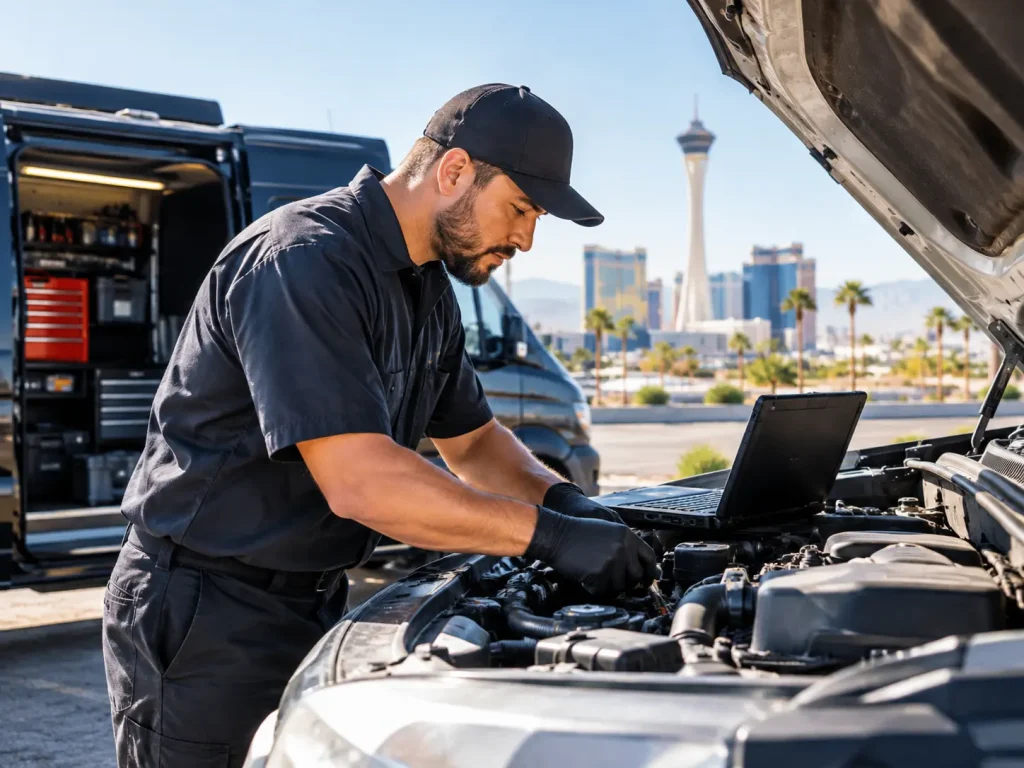
Phoenix summers are famous for a reason. Weeks of triple digit temperatures, blazing sun, and pavement hot enough to soften rubber take a steady toll on every vehicle on the road. The damage often builds quietly, and by the time something fails, it can feel sudden. A battery dies with no warning, a tire splits on the freeway, or the air conditioning gives out on the hottest day of the year. In reality, the car usually gave small hints along the way. This guide covers the warning signs that Phoenix heat is damaging your car, what each sign tends to mean, and when to have it checked, with a focus on car heat damage in Phoenix and the summer car care steps that help you catch problems early.
Why Heat Damages Cars So Easily
Heat speeds up wear. It thins and breaks down oil and other fluids, dries out rubber and plastic, raises pressure in tires and cooling systems, and makes electrical parts run hotter. A car parked in the sun can reach extreme temperatures inside, and the engine bay gets hotter still once the engine is running. Short trips do not give the car much chance to cool down, and stop and go traffic adds even more strain. None of this means your car is doomed. It simply means that in Phoenix, small problems show up sooner and grow faster, so paying attention matters more.
Sign One: Slow or Labored Starting
The battery is the part that most often fails in extreme heat. High temperatures speed up the chemical reaction inside the battery, which causes internal wear and evaporates fluid. A battery weakened by summer may seem fine for a while and then quit without much warning. Watch for:
- An engine that cranks slowly or hesitates before starting
- Dim headlights or interior lights, especially at idle
- A battery or charging warning light on the dashboard
- A swollen or bulging battery case
- White, blue, or green crust on the terminals
- A battery that is several years old
Our article on why Phoenix summers are the toughest test for your car’s battery explains this in more detail. A quick battery and charging system test can tell you how much life is left. If your car ever fails to start, our guide to the top 10 reasons your car won’t start and how to get back on the road covers the common causes.
Sign Two: A Rising Temperature Gauge
Your cooling system works overtime in the desert. If the temperature gauge creeps above its usual position, especially in traffic or on a hot afternoon, take it seriously. Other warning signs include:
- A sweet smell, which can indicate a coolant leak
- Steam or vapor rising from under the hood
- Puddles of green, orange, pink, or yellow fluid under the car
- A coolant reservoir that keeps running low
- A heater that blows cool air, which can point to low coolant or poor circulation
- Radiator fans that do not seem to run
If the gauge climbs or you see steam, pull over safely and turn off the engine, and let it cool before you open the hood. Never open the radiator or coolant cap on a hot engine, because the system is under pressure. Overheating can cause serious engine damage quickly, so do not push on and hope it passes.
Sign Three: Air Conditioning That Is Weak, Warm, or Noisy
In Phoenix, AC trouble is more than an inconvenience. The air conditioning works hardest in extreme heat, and a weak part fails first. Signs of a struggling system include air that is not as cold as it used to be, cooling that fades at idle or in traffic, airflow that is weak even on the highest setting, a musty smell, and grinding, rattling, or squealing when the AC is on. A system that has lost refrigerant almost always has a leak, and adding refrigerant alone does not fix the cause. Other common culprits include a failing compressor, a clogged condenser, cooling fan problems, and a clogged cabin air filter.
Sign Four: Cracks, Bulges, or Low Pressure in the Tires
Hot pavement is hard on tires. Heat raises the pressure inside and softens the rubber, which can lead to blowouts, especially on tires that are underinflated, overloaded, or old. Look for:
- Cracks in the sidewalls or between the tread blocks
- Bulges or bubbles on the sidewall
- Uneven or very worn tread
- Pressure that drops often, which can mean a slow leak
- Tires that are many years old, even if the tread looks fine
Check the pressure when the tires are cold, using the number on the label inside the driver’s door jamb or in your owner’s manual, not the number printed on the tire. The pressure changes through the day with the temperature, so a morning check is best.
Sign Five: Cracked, Brittle, or Swollen Rubber Parts
Heat dries out rubber. Belts, hoses, seals, and gaskets all age faster under the Phoenix sun and the heat of the engine bay. Look for cracks, fraying, or a glazed, shiny surface on belts, hoses that feel hard, soft, or mushy, bulges near the clamps, and oil or fluid seeping around gaskets. A squealing belt at startup is a common sign of wear. The serpentine belt drives several important parts, so a failure can leave you stranded quickly. These parts are inexpensive compared with the damage a failure can cause, so inspecting them before summer peaks is wise.
Sign Six: Dark, Thin, or Low Fluids
Heat breaks down fluids faster. Check the engine oil, coolant, brake fluid, power steering fluid, and transmission fluid, using your owner’s manual for the correct procedure. Oil that is very dark, gritty, or low is a warning sign. Brake fluid absorbs moisture over time and can lose effectiveness in hot conditions. Transmission fluid that smells burnt or looks dark can point to overheating. If you are constantly adding fluid, there is a leak somewhere that should be found. Severe driving conditions, which include extreme heat and stop and go traffic, often call for shorter service intervals than the standard schedule, so check what your manual says.
Sign Seven: Brakes That Squeal, Grind, or Feel Different
Heat and heavy traffic add stress to brakes. Pay attention to squealing or grinding, a soft or spongy pedal, vibration when stopping, pulling to one side, or a burning smell after driving. Brakes are a safety system, so any of these warrants an inspection. Following distance and gentle braking also help brakes last in hot conditions.
Sign Eight: A Cracked, Warped, or Sticky Dashboard
The interior takes a beating too. Constant sun can crack dashboards, fade and dry out seats, warp plastic trim, and make steering wheels and seat belt buckles too hot to touch. A cracked dash is more than cosmetic, since it can interfere with airbag panels and trim. A sunshade, window tint where legal, parking in shade or a garage, and interior protectants made for the purpose all help. Avoid leaving items that react badly to heat in the car, and never leave children or pets in a parked car, even briefly.
Sign Nine: Faded, Peeling, or Chalky Paint and Cloudy Headlights
Ultraviolet rays and heat break down clear coat, which can start to peel and leave the paint exposed to further damage. Plastic headlight lenses can turn yellow and hazy, which reduces how well you can see at night. Regular washing, wax or sealant, and parking in shade help the paint, and a technician or detailer can advise on restoring cloudy lenses. Clear lenses matter for safety, so do not dismiss this as only an appearance problem.
Sign Ten: Electrical Gremlins
Heat is hard on electrical parts. Warning signs include flickering lights, accessories that cut out, a dashboard that behaves strangely, a radio or screen that resets, and warning lights that come on and off. Connectors and wiring can degrade, and sensors can fail in high temperatures. A check engine light with no obvious cause is worth a scan, because a stored code can point you to the problem before it gets worse.
Sign Eleven: Worn Wiper Blades
Sun bakes wiper rubber until it cracks and hardens, so blades streak, chatter, or skip. They often fail just as monsoon storms arrive and visibility matters most. Check them before the season, and clean the windshield inside and out to cut glare.
What Should I Do If I Notice These Signs?
- Do not ignore small warnings, because heat makes them grow faster
- Note when the symptom happens, such as at idle, in traffic, or at startup
- Check your owner’s manual for the recommended service schedule and the severe service guidance
- Have the battery, cooling system, tires, belts, hoses, brakes, and fluids inspected
- Fix leaks and weak parts before the hottest weeks
- Keep an emergency kit in the car with water, a phone charger, a flashlight, and jumper cables or a jump starter
If you break down in extreme heat, stay with the vehicle when it is safe, call for help, and keep water on hand.
Can a Mobile Mechanic Check for Heat Damage?
In many cases, yes. A mobile mechanic can come to your home or workplace in the Phoenix area, test the battery and charging system, inspect the cooling system, belts, hoses, tires, brakes, and fluids, scan for warning codes, and handle many common repairs on site, such as battery replacement and belt replacement. That means you can deal with heat related problems without sitting in a hot waiting room. Some jobs, such as major air conditioning work or repairs that need a lift or specialized equipment, may need a full shop, and a trustworthy technician will tell you honestly when that is the case. When you book, share your vehicle’s year, make, model, and mileage, and describe the signs you have noticed.
Catch It Before It Strands You
Phoenix heat does not forgive neglected cars, but it does usually give warnings first. A slow start, a gauge that runs warm, cracked rubber, or an AC that is not quite as cold as it used to be is your chance to act while the repair is still small. If you have noticed any of these signs, get the car checked before the next heat wave.
To learn more about our services, visit our homepage. If you would like your car checked for heat damage, reach out through our contact us page and we will come to you anywhere in the Phoenix area.